

A new report released by The Nature Conservancy has analyzed 4,000 cities to demonstrate the health, climate and biodiversity benefits of source water protection.
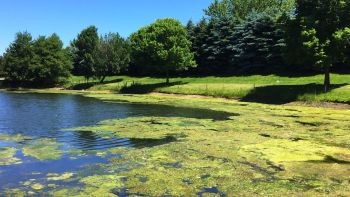
Deforestation, poor agricultural practices and other land uses have led to moderate to high degradation in 40 percent of the world’s urban source watersheds.
Water quality and quantity challenges have typically been met with the addition of more gray infrastructure—including aqueducts, reservoirs and treatment plants—to move and treat water for human and industrial purposes.
 Beyond the Source: The environmental, economic and community benefits of source water protection says that improving the health of land around water sources—a strategy called source water protection—can improve water quality, restore reliable water flows and bring added benefits to local ecosystems and communities.
The global analysis demonstrates that four out of five of the more than 4,000 cities studied could meaningfully reduce sediment and nutrient pollution in the water they use through three source water protection activities—reforestation of pastureland, forest protection and the planting of cover crops.
In many cases, source water protection can pay for itself through water treatment savings. The Conservancy found that one in six of the cities studied could see a positive return on investment in source water protection through reduced annual treatment costs alone. For half of the cities analyzed, these activities could be implemented for about US$2 per person annually.
The nature-based solutions also provide a number of co-benefits, including improving the health and well-being of people, preserving biodiversity, capturing and storing carbon and building more climate-resilient communities. When cities “stack” the value of these co-benefits on top of the savings realized in water treatment costs, they can derive even greater value.
However, the report says that maximizing the benefits of conservation activities will require collective action.
Water Funds: a mechanism for realizing source water protection
The Conservancy is flagging up the use of water funds which enable downstream water users to jointly invest in upstream land conservation and restoration, as a successful mechanism for securing improved water quality and, in some cases, more reliable flows.
The Conservancy estimates that an increase in annual global spending on ecosystem service programs between US$42 billion and US$48 billion would be required to achieve a 10 percent reduction in sediment and nutrient pollution in source watersheds worldwide. This level of spending could improve water security for at least 1.4 billion people.
Water funds provide a mechanism for downstream users to directly or indirectly compensate upstream users for activities that deliver water benefits to the payer i.e. the public and private water users, including businesses, utilities and local governments, who invest collectively in conservation of the watersheds from which they source their water.
The Nature Conservancy is now working with cities and water users around the world to create water funds, which enable water users to collectively invest in source water protection activities for the purpose of securing better water quality and improving the health and well-being of local communities. The Conservancy and its partners already have 29 water funds in operation and another 30 in development.
“Communities downstream are going to benefit if their water comes when they want it and how they want it,” said Andrea Erickson, managing director for water security at The Nature Conservancy. “Source water protection can provide that connection between downstream users and upstream individuals—the farmers, ranchers and other community members that are a critical part of the solution.”
At a time when there is growing demand for limited water supplies—and when climate change is making availability of water even more uncertain—the report says that source water protection is a powerful strategy to not only secure clean water but also mitigate and adapt to climate change, protect biodiversity, and support human health and well-being across watersheds.
Click here to download the full report Beyond the Source: The environmental, economic and community benefits of source water protection
 James Sumsion, CEO of predictive water intelligence specialists Kohtari, says the water sector needs to take a giant leap forward, so that it can anticipate and act upon water quality issues - rather than merely react.
 Ray Moulds, Sales Director at Flood Control International, takes a look at how automated sliding floodgates are supporting secondary containment at water and sewerage company sites.
 With the UK government demanding a 50% reduction in storm overflow spills by 2029, the era of reactive management is over. Speaking in the House of Commons on 21 July 2025, then environment secretary Steve Reed said, “This Government will cut water companies’ sewage pollution in half by the end of the decade.”
 ERG, the leading supplier of odour control systems and industrial gas cleaning & thermal systems, has been awarded the coveted King’s Award for Enterprise.

 Hear how Scottish Water has completed its £235 million Ayrshire Glasgow Resilience Project - customers across Greater Glasgow, Ayrshire and East Renfrewshire will now benefit from a more secure and resilient water supply.
 Hear how United Utilities is accelerating its investment to reduce spills from storm overflows across the Northwest.
 Find out more about the remarkable career opportunities on offer at WSP - scroll down to watch the inspirational video.